# Cambiar puerto RDP (Escritorio Remoto) en Windows
### Modificar puerto RDP o Escritorio Remoto de Windows Server 2012
Seleccionar el nuevo puerto RDP. Lo que aquí usaremos es el puerto 22890, a modo de ejemplo. Es a tu total elección utilizar otro, en la medida que sea correcto y no aparezca ocupado como por otro servicio.
Sumar la regla en el Firewall a través del comando que te mostramos a continuación desde CMD o PowerShell:
`netsh advfirewall firewall add rule name="RDP Puerto alternativo" dir=in localport="33890" protocol=tcp action=allow`
Cambiar el valor del registro aplicando este comando en PowerShell:
`Set-ItemProperty -Path HKLM:\SYSTEM\CurrentControlSet\Control\Terminal*Server\WinStations\RDP-TCP\ -Name PortNumber -Value 33890`
¡Perfecto! Ahora solo debés reiniciar el servidor para luego conectarte con el nuevo puerto.
### Modificar el puerto RDP o Escritorio Remoto de Windows Server 2008 Windows Server 2003
El método es muy parecido, pero la salvedad es que, como algunos comandos no son aceptados por la versiones de Windows Server 2008 o Windows Server 2002, vas a tener que hacer el procedimiento a mano:
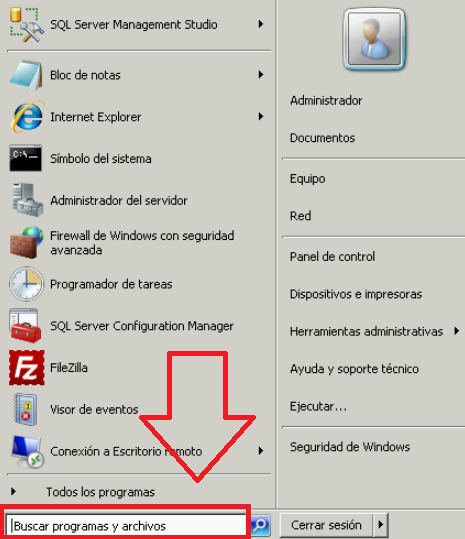
* Tipear en el buscador del menú Inicio regedit.exe. En caso de que la versión que estás usando no tenga un buscador, simplemente tipear en Ejecutar, regedit.exe.
* Identificar esta ruta:
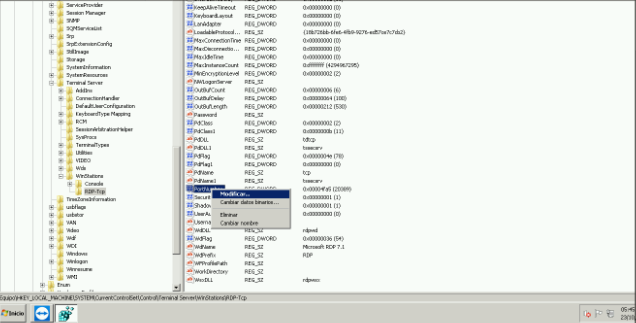
`HKEY_LOCAL_MACHINE\System\CurrentControlSet\Control\TerminalServer\WinStations\RDP-Tcp\PortNumber`
* Buscar la variable PortNumber, hacer clic derecho y entrar a “Modificar”.
* En la nueva ventana emergente, optar por la selección “Decimal'', y tipear el puerto al que querés transformar en el campo de texto.

* Retornar al menú Inicio y abrir el Firewall de Windows.

* Ir a configuración avanzada

* Ir a Reglas de entrada

* Hacer click en Nueva regla en la parte derecha de la pantalla.

* En la nueva ventana emergente, presionar “Puerto” y seleccionar el botón “Siguiente”.

* Seleccionar TCP, especificar puerto en el campo de texto con el nombre de Puertos locales específicos y entonces seleccionar “Siguiente”. \
\
AYUDA. Atención en este paso a lo que tipeás. Porque de hacerlo erróneamente no te será posible conectar nuevamente con tu Servidor y precisarás de nuestra ayuda

* Elegir la opción “Permitir” y después presionar sobre “Siguiente”, nuevamente

* En este momento elegir para qué redes esta regla será utilizable. Ir a “Siguiente” sin hacer ningún cambio.

* Tipear un nombre para la regla y un detalle, si así lo querés. Luego, hacer click en “Finalizar”.

¡Perfecto! Sólo resta reiniciar tu Servidor y listo. Tu puerto de RDP o Escritorio Remoto de Windows ya ha sido cambiado.
---
# Agent Instructions: Querying This Documentation
If you need additional information that is not directly available in this page, you can query the documentation dynamically by asking a question.
Perform an HTTP GET request on the current page URL with the `ask` query parameter:
```
GET https://ayuda.latincloud.com/cloud-vps/windows/cambiar-puerto-rdp-escritorio-remoto-en-windows.md?ask=
```
The question should be specific, self-contained, and written in natural language.
The response will contain a direct answer to the question and relevant excerpts and sources from the documentation.
Use this mechanism when the answer is not explicitly present in the current page, you need clarification or additional context, or you want to retrieve related documentation sections.